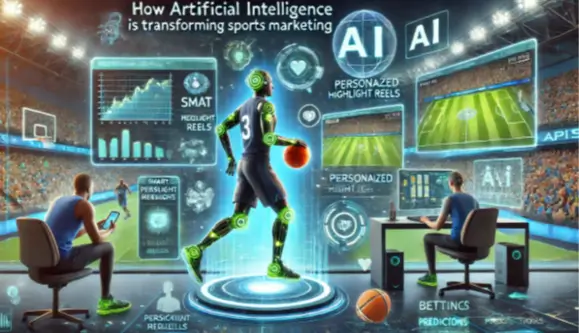
Sports teams deploy AI to convert on-field data, wearables, and video into actionable insights. Data standards and taxonomies unify disparate sources for trustworthy analyses. AI informs training, recovery, and in-game decisions, accelerating response times and strategic shifts. Governance, transparency, and privacy guardrails matter as models explain outcomes and support ethical use. The integration raises questions about cost, talent, and long-term impact, inviting further examination of how performance, health, and psychology collide in practice.
What AI Is Changing in Modern Sports Analytics
AI is reshaping how teams collect, process, and act on performance data. In modern analytics, AI enhances decision speed and objectivity, translating streams of metrics into actionable strategies. Data governance ensures trusted inputs and compliance, while model explainability clarifies recommendations for stakeholders. The approach prioritizes transparency, robustness, and freedom to iterate, enabling adaptive, evidence-based performance improvements across roles and leagues.
How Teams Collect and Harmonize Data for AI Insights
To derive AI-ready insights, teams collect diverse data streams—from on-field sensors and wearable devices to video analytics and performance logs—then harmonize them through standardized Taxonomies, timestamps, and data dictionaries. This enables streamlined data collection and interoperable datasets, where data harmonization reduces noise, aligns formats, and clarifies lineage. Analysts quantify quality, provenance, and gaps, accelerating trustworthy, scalable analytics.
See also: How Neural Networks Work in Artificial Intelligence
AI Applications: Performance, Health, and Strategy in Practice
Performance optimization, player health monitoring, and strategic planning converge in AI-driven practice, where real-time analytics, predictive health risk assessments, and scenario modeling inform decisions across training, competition, and recovery.
The approach integrates player psychology insights with crowd dynamics, enabling data-driven adjustments to pacing, motivation, and pacing-related risk.
In practice, teams balance autonomy and guidance, translating metrics into adaptable performance strategies and resilient game plans.
Ethics, Budget, and Governance for AI in Sports
Governance bias is mitigated through diverse data, independent reviews, and clear roles. Strong governance supports scalable innovation while preserving autonomy, privacy, and fan trust.
Frequently Asked Questions
What Are the Biggest AI Misconceptions in Sports Analytics?
Misconceptions about AI persist, with AI hype vs reality often overstated; analytics reveals incremental gains rather than miracles. The biggest misbelief is expecting universal, flawless decisions, while models deliver probabilistic insights requiring human validation and domain context.
How Do Teams Overcome Data Labeling Challenges?
Like a compass in a fog, teams overcome data labeling challenges by standardizing protocols and auditing inputs. They emphasize data quality, harmonizing sources, and documenting lineage, enabling reproducible insights that preserve autonomy and empower informed, freedom-loving decision makers.
Which Sports Benefit Least From AI and Why?
The least valuable benefit arises where data are scarce, and thus predictive models falter; sports with limited data are hampered, making ai value marginal in performance analytics when data scarce and niche competition dominates.
What’s the Return on Investment Timeline for AI in Sports?
The return on investment for AI in sports varies, typically materializing 2–5 years as data governance ensures reliable inputs and model interpretability clarifies decision impact, enabling scalable improvements while preserving autonomy and ethical, transparent use of analytics.
How Is AI Used to Engage Fans Beyond Analytics?
A team once tracked a stadium crowd reaction like a pulse, illustrating AI-fueled engagement storytelling; fans experience deeper immersion through personalized content, interactive polls, and real-time highlights, driving fan immersion and measurable engagement growth.
Conclusion
AI-driven sports analytics reshape training, performance, recovery, and in-game decision-making by harmonizing on-field sensors, wearables, and video data into transparent, governed insights. An illustrative stat: teams using AI report up to a 12% reduction in soft-tissue injuries and a 9% improvement in sprint efficiency within a season, underscoring data’s predictive power. The approach balances speed with ethics, ensuring privacy, explainability, and fan trust while enabling autonomous-guided, human-backed decisions that optimize outcomes.
